|
UC
IPM Home > Homes, Gardens, Landscapes, and Turf > Trees and Shrubs > Fir
How to Manage Pests
Pests in Gardens and Landscapes
Fir—Abies spp.
Family Pinaceae (Pine family)
Plant Identification
Firs are tall, symmetrical evergreen trees. Branches are whorled and leaves are needlelike. Firs produce large cones that shatter after ripening, leaving a spiky stalk.
Optimum conditions for growth
Fir trees do best near their natural environment in mountain areas. They are found in rock gardens; smaller plants do well in containers. They grow slowly in hot, dry or windy areas in low elevations. Most species prefer full sun or light shade and require moderate to regular amounts of water. Pruning is rarely necessary. 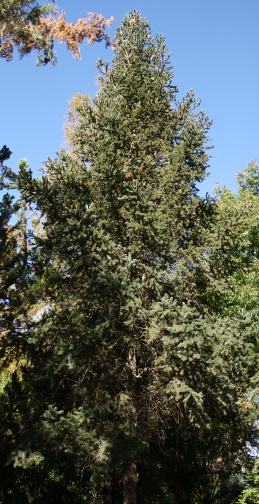
Fir tree
|
Pests and disorders of Abies spp.
Invertebrates
- Adelgids
- Aphids
- Balsam twig aphid
- Giant conifer aphid
- Spruce aphid
- Bark beetles
- Engraver beetles
- Red turpentine beetles
- Clearwing moths
- Conifer twig weevils
- Foliage-feeding caterpillars
- Douglas-fir tussock moth
- Rusty tussock moth
- Nematodes
- Pitch moths
- Sawflies
|
Invertebrates (continued)
Diseases
- Annosus root diseases
- Canker diseases
- Needle casts
- Root and crown rots
- Wetwood or slime flux
- Wood decay
Environmental disorders
- Dwarf mistletoe
- Mineral deficiencies
- Nutrient and mineral excesses
- Poor water
management
Weeds
Vertebrates |
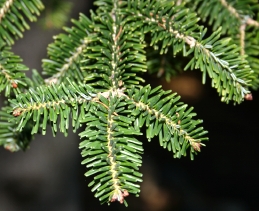
Foliage of fir tree
|
|