
|
|

|
|
Pests in Gardens and Landscapes: Quick Tips
 Rose aphids on young blossom. 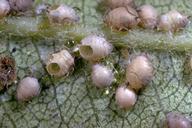 Mummified aphids that were parasitized by a wasp.  Lady beetle larva eating an aphid. Most plants have one or more aphid species that feed on it, but feeding usually does not damage or kill established plants. Aphids can curl leaves and produce sticky honeydew that may attract ants and sooty mold. Aphids have many naturally occurring predators and parasites that feed on them. On sturdy plants, aphids can be knocked off with a strong stream of water. When aphid numbers are high and other control methods aren’t effective, pesticides such as insecticidal soaps and oils are available. Aphids are common in gardens and landscapes.
How can I reduce aphid numbers?
Are there any good bugs that will eat aphids?Naturally occurring insect predators such as lady beetles and lacewings will visit plants when aphids are abundant. The larval, or immature stage, of these “natural enemies” most often feed on aphids. Ants protect aphids from natural enemies. Keep ants off plants to help beneficial insects do their job. Encourage natural enemies by avoiding the use of broad-spectrum insecticides that can be toxic to them and by planting flowering plants that provide nectar and pollen for them. Common natural enemies of aphids include:
What about pesticides?
Minimize the use of pesticides that pollute our waterways. Use nonchemical alternatives or less toxic pesticide products whenever possible. Read product labels carefully and follow instructions on proper use, storage, and disposal. |



 see videos on this topic