|
|
Avocado
> Year-Round IPM Program > Persea
Mite Sampling > Mites
Avocado
Natural Enemies of Mites
On this page
- Amblyseius
(Neoseiulus) californicus
- Spider mite destroyer
- Franklinothrips sp.
|
- Sixspotted thrips
- Black hunter thrips
- Banded thrips
|
- Green lacewing
- Brown lacewing
- Dustywing larva
|
Names link to more information on identification
and biology.
Click on photos to enlarge
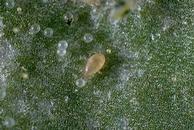
Amblyseius (Neoseiulus) californicus adult
Identification tip: Predatory mite eating a pest mite egg. Several predatory mite
species occur in avocado.
|
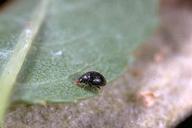
Spider mite
destroyer,
Stethorus
picipes, adult
Identification tip: Adults and larvae of this lady beetle feed
almost entirely on mites.
|

Franklinothrips sp. adult
predatory thrips
Identification tip: Eats mites, thrips, and other pests such
as avocado lace bug.
|
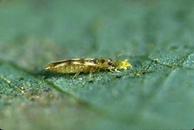
Sixspotted thrips adult
Identification tip: Scolothrips
sexmaculatus feeds mostly on mites. |

Black hunter thrips, Leptothrips mali
Identification tip: This dark brown
or entirely black species preys on mites and certain other
pests such as scales. |

Banded thrips, Aeolothrips fasciatus
Identification tip: This predatory
thrips feeds on pests such as mites, whiteflies, and other
thrips species. |
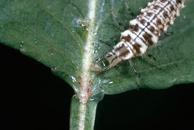
Green lacewing larva
Identification tip: Larvae (and adults in certain
species) prey on mites and various soft-bodied insects,
including caterpillars, leafhoppers, mealybugs, and whiteflies. |
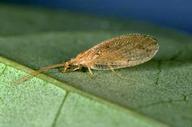
Brown lacewing adult
Identification tip: Both larvae and adults feed on
mites and soft-bodied insects, especially aphids, mealybugs,
scales, and whiteflies. |
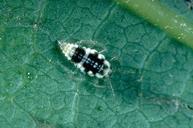
Dustywing larva
Identification tip: Dustywing larvae feed on all
mite stages and virtually any tiny insect they can capture. |
|