Home and Landscape

Identification and Confirmation—Nutrient Disorders

Symptoms of common nutrient and mineral disorders.
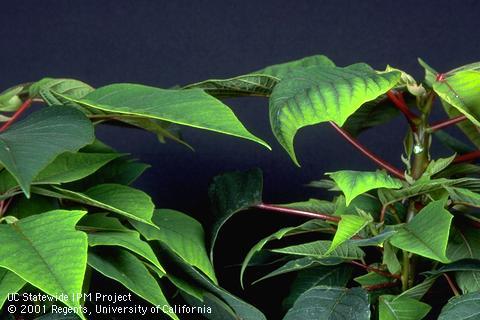
Leaf chlorosis and epinasty downward cupping of edges from excess ammonium, UC Davis Credit: Jack Kelly Clark, UC IPM
Foliage damage from ammonium. Credit: Jack Kelly Clark, UC IPM

Excess ammonium in poinsettia

Spindly growth and pale; downward cupping leaf margins
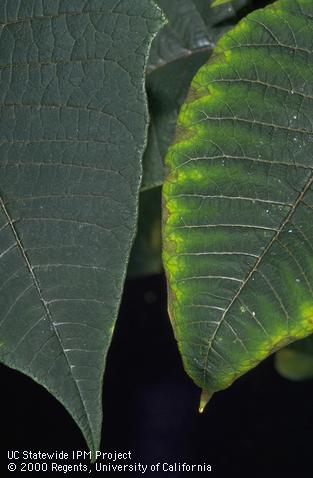
Marginal leaf necrosis in potted poinsettia sprinkler irrigated with excess sodium chloride water, UC Davis Credit: Jack Kelly Clark, UC IPM
Foliage damage by sodium chloride Credit: Jack Kelly Clark, UC IPM

Excess sodium in poinsettia

Marginal leaf necrosis
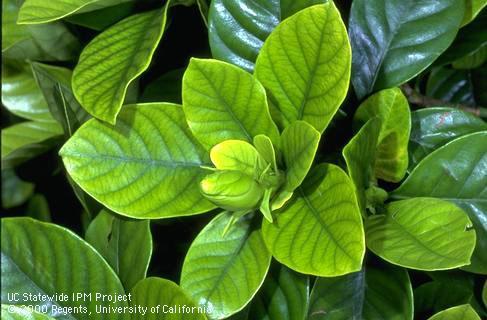
Chlorotic leaves with green veins from iron deficiency in greenhouse gardenia, San Mateo Co. Credit: Jack Kelly Clark, UC IPM
Foliage damaged due to iron deficiency . Credit: Jack Kelly Clark, UC IPM

Iron-deficient gardenia

Interveinal chlorosis.  Entire leaf may turn yellow or white, except for the veins
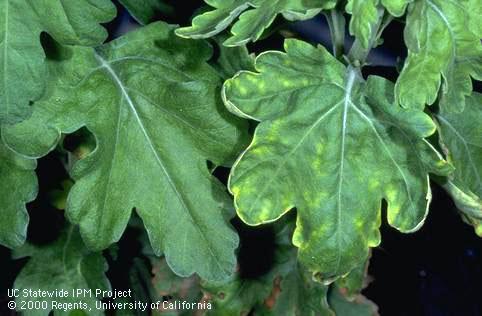
Close-up of marginal leaf chlorosis and cupped leaves (right plant) from excess boron in irrigation water, Environmental Horticulture greenhouse, UC Davis Credit: Jack Kelly Clark, UC IPM
Foliage damage due to excess boron. Credit: Jack Kelly Clark, UC IPM

Excess boron in chrysanthemum

Chlorotic or purplish to brown marginal necrosis or spotting of leaves. Foliage may be dry or papery
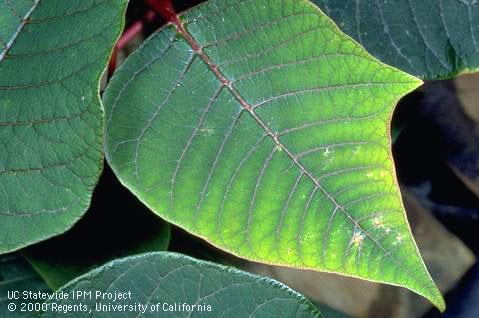
Chlorotic, boron deficient leaf (right), UC Davis Credit: Jack Kelly Clark, UC IPM
Foliage damage due to boron deficiency. Credit: Jack Kelly Clark, UC IPM

Boron-deficient poinsettia

Chlorosis progressing to necrosis along margins of older leaves. Slight necrosis of leaf veins or chlorotic leaf spots
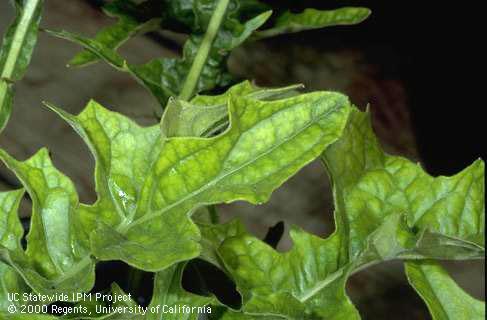
Green veins in chlorotic new Gerbera jamesonii Asteraceae leaves probably from iron deficiency. UC Davis Environmental Horticulture greenhouse by JKC.  Credit: Jack Kelly Clark, UC IPM
Iron deficiency probably caused this Gerbera foliage to turn yellow while the leaf veins remained green. Credit: Jack Kelly Clark, UC IPM

Iron-deficient gerbera

Interveinal chlorosis. Entire leaf may turn yellow or white, except for the veins
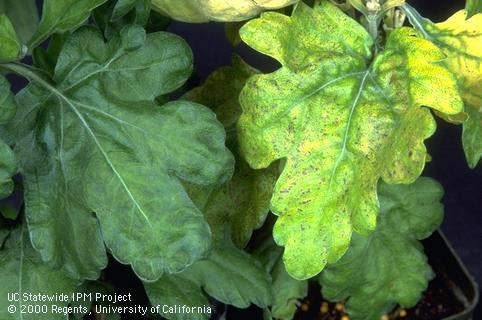
Close-up of chlorotic, necrotic spotted leaves (right) from excess manganese in sprinkler irrigation water, UC Davis Credit: Jack Kelly Clark, UC IPM
Foliage damage due to excess manganese. Credit: Jack Kelly Clark, UC IPM

Manganese toxicity in chrysanthemum

Stunted, chlorotic younger leaves. Necrotic spots between veins
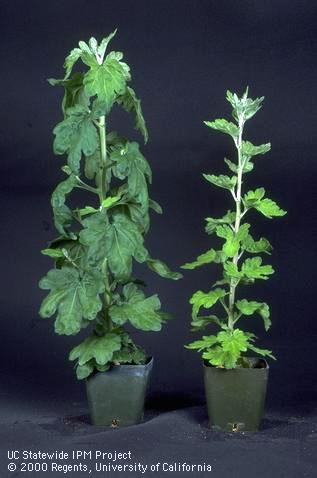
Chlorotic, stunted plant (right) from nitrogen deficiency, Davis Credit: Jack Kelly Clark, UC IPM
Foliage damage due to nitrogen deficiency. Credit: Jack Kelly Clark, UC IPM

Nitrogen-deficient chrysanthemum

Leaves pale green to yellowish overall. Commonly appears first on older leaves
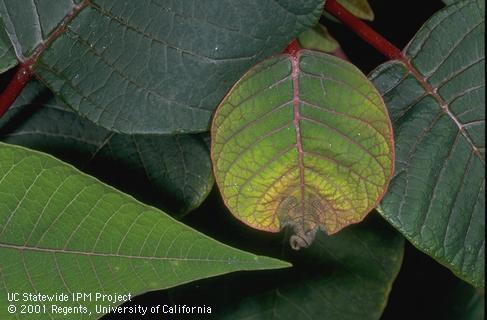
Chlorotic, necrotic leaf (right) from phosphorus deficiency, Davis Credit: Jack Kelly Clark, UC IPM
Yellowing and browning of a poinsettia leaf caused by phosphorus deficiency. Credit: Jack Kelly Clark, UC IPM

Phosphorus-deficient poinsettia

Foliage yellowish, reddish, or purplish, especially on older leaves.

The pesticide information on this page may become out of date as products and active ingredients change or become unavailable. Some of the pesticides listed are only available for use by licensed pesticide applicators. No endorsements of named products are intended, nor is criticism implied of products not mentioned.