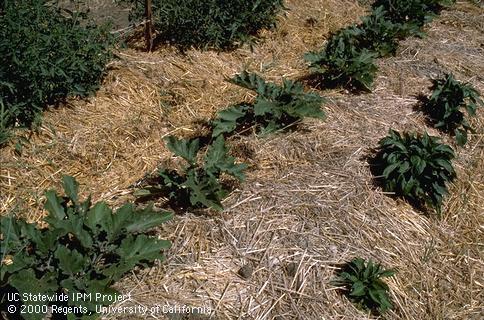
One of the most important components of a weed-management program is keeping weed seeds and rhizomes, stolons, and tubers of perennial weeds out of your cropped area. Never let weeds go to seed in your garden or in areas surrounding your garden. Most weeds are prodigious seed producers; for example, one pigweed plant can produce over 250,000 seeds, one black nightshade over 800,000, and one barnyard grass plant over 1 million seeds. Remember that many weed seeds and other propagules have the ability to remain dormant in the soil for a number of years. If you neglect weed control one year, it may take several years to get weed populations down to earlier levels. Persistence with weed control efforts ensures less severe and easier to manage weed problems as the years go by.
Seeds and other plant propagules move into the garden on cultivation equipment, with water, on clothing, and in compost, mulches and manure. Make every effort to limit these avenues of entry. Never use fresh manure; compost it or fumigate it before application. Be sure your composting system is hot enough to kill weed seeds, and check plant-derived or organic mulches for weed seeds and propagules; even soil sold as "clean topsoil" in garden stores may contain weed seeds. In the home garden, bird seed can be an important source of weeds.