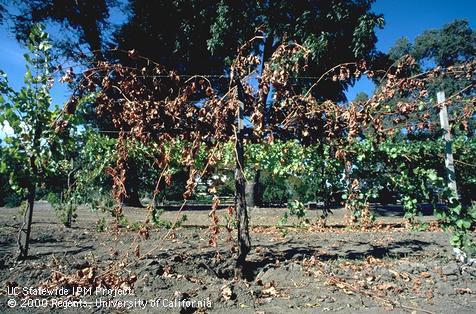
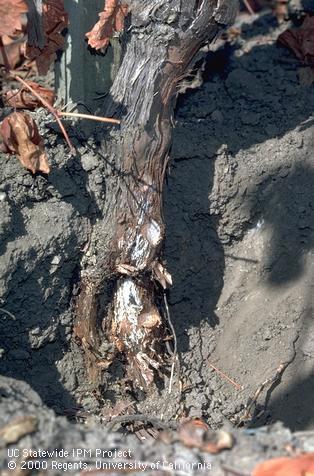
Vines affected by Armillaria root rot decline in vigor, the leaves turn yellow in early summer, and cane growth becomes weaker before the vine eventually collapses. Areas of diseased vines may gradually increase in size each year if left untreated. The crown and root tissue becomes rotted. Underneath the bark are creamy white plaques or fans of fungus mycelium with a distinct mushroom odor.
Solutions
If less than half of the crown's circumference is girdled, it may be possible to save the vine. In late spring, remove the soil from around the crown and cut away all bark and tissue that is invaded by the white leathery fungus. Leave uninfected tissue intact and keep the crown exposed for drying. If more than half of the crown is infected, the vine should be removed. Before replanting, allow the soil to dry out and replant with a resistant species. Maintaining vines with good fertilization and irrigation programs helps preserve their natural resistance to this fungus.
For more information, see the Pest Notes: Armillaria Root Rot.