Agriculture: Tomato Pest Management Guidelines

Invertebrates—Natural Enemies of Aphids

Naturally occurring parasites, predators, and diseases are common and can provide control of aphids. Use the photos below to identify natural enemies. Names link to more information on identification and biology.

Click on photos to enlarge
Natural enemies of aphids

Parasitic wasps
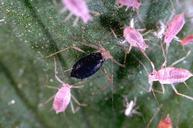
Aphids mummified by parasitic wasps
Identification tip: The dead black aphid above has been parasitized by an Aphelinid wasp. Aphids parasitized by other wasp species may form beige mummies.

Parasitic wasps
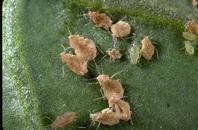
Parasitic wasps
Identification tip: Parasitic wasps such as Lysiphlebus testaceipes kill aphids, causing them to become golden-brown mummies.

Predaceous adult bigeyed bug
Bigeyed bug
Identification tip: Adults and nymphs are oval, somewhat flattened, about 1/4 of an inch long, with a wide head and prominent bulging eyes.

Syrphid fly larvae
Syrphid fly
Identification tip: Larvae are legless, maggot shaped, and opaque with tapered heads.

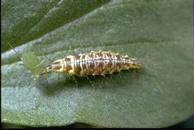
Chrysoperla carnea, green lacewing larva
Green lacewings
Identification tip: Larvae are flattened, pale with dark markings, a tapered tail, and prominent mandibles. They are shaped like tiny alligators measuring 1/8 to 4/5 of an inch long.

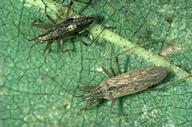
Damsel bugs
Damsel bugs
Identification tip: Adults (bottom) are slender insects that are mostly yellowish, gray, or dull brown, measuring about 2/5 of an inch long, and have elongated heads and long antennae.
Minute pirate bug attacking an aphid
Minute pirate bugs
Identification tip: Adults are small, 1/12 to 1/5 of an inch long, oval, black or purplish with white markings, and have a triangular head.

Fungus infected aphids
Fungus-killed (Entomophthora aphidis) green peach aphids
Identification tip: Look for aphids that appear fuzzy and orangish. Monitor especially during humid weather when fungal pathogens are more prevalent.

 
More natural enemies of aphids: lady beetles

Predaceous larva of convergent lady beetle
Convergent lady beetle
(larva)
Identification tip: Larvae are elongate with long legs and resemble tiny alligators.

Adult convergent ladybeetle
Convergent lady beetle (adult)
Identification tip: Adults are mostly orange with black spots and converging white marks on the thorax. Some individuals have fewer spots, and some, no spots.

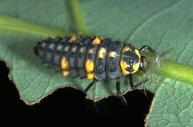
Sevenspotted lady beetle larva eating an aphid
Sevenspotted lady beetle (larva)
Identification tip: Larvae are elongate, grayish, yellow- spotted, and alligator shaped.

Adult sevenspotted ladybeetle
Sevenspotted lady beetle (adult)
Identification tip: Adults have a black thorax with white along the front margin. Seven black spots are on the red or orangish wing covers, which may have 2 white areas near the front.

Text Updated: 05/26

Feedback