
This section contains archived content made available for reference, research, or record keeping purposes. These materials are not actively maintained and may not meet current accessibility standards. All links have been removed. Visit our current website for updated pages.
|
|


|
|
Pests in Gardens and Landscapes: Quick Tips
 A trail of Argentine ants. 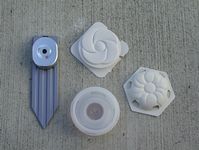 Various types of ant bait stations.  Fill ant entryways with caulk. Although ants are annoying when they come indoors, they can be beneficial by feeding on fleas, termites, and other pests in the garden. Spraying them with pesticides will not prevent more ants from entering. Most ants live outdoors, so focus on keeping ants from entering buildings. Combine several methods such as caulking entryways, cleaning up food sources, and baiting with pesticides when necessary. Avoid spraying pyrethroids (like bifenthrin and cypermethrin), especially on hard surfaces such as driveways or sidewalks or around the foundation of buildings. These products pollute waterways. Make your home less attractive to ants.
When ants invade your home.
How ant baits work:Ant baits contain insecticides mixed with materials that attract worker ants looking for food. The ants take the product back to the nest where the entire colony, including queens, can be killed. The pesticide must be slow acting so workers won’t be killed before they get back to the nest. How to use baits:
Minimize the use of pesticides that pollute our waterways. Use nonchemical alternatives or less toxic pesticide products whenever possible. Read product labels carefully and follow instructions on proper use, storage, and disposal. |


 see videos on this topic